Acoustic holography
3D-printed holographic lenses are designed for high-fidelity volumetric beam shaping for distributed and multifocal treatment volumes.

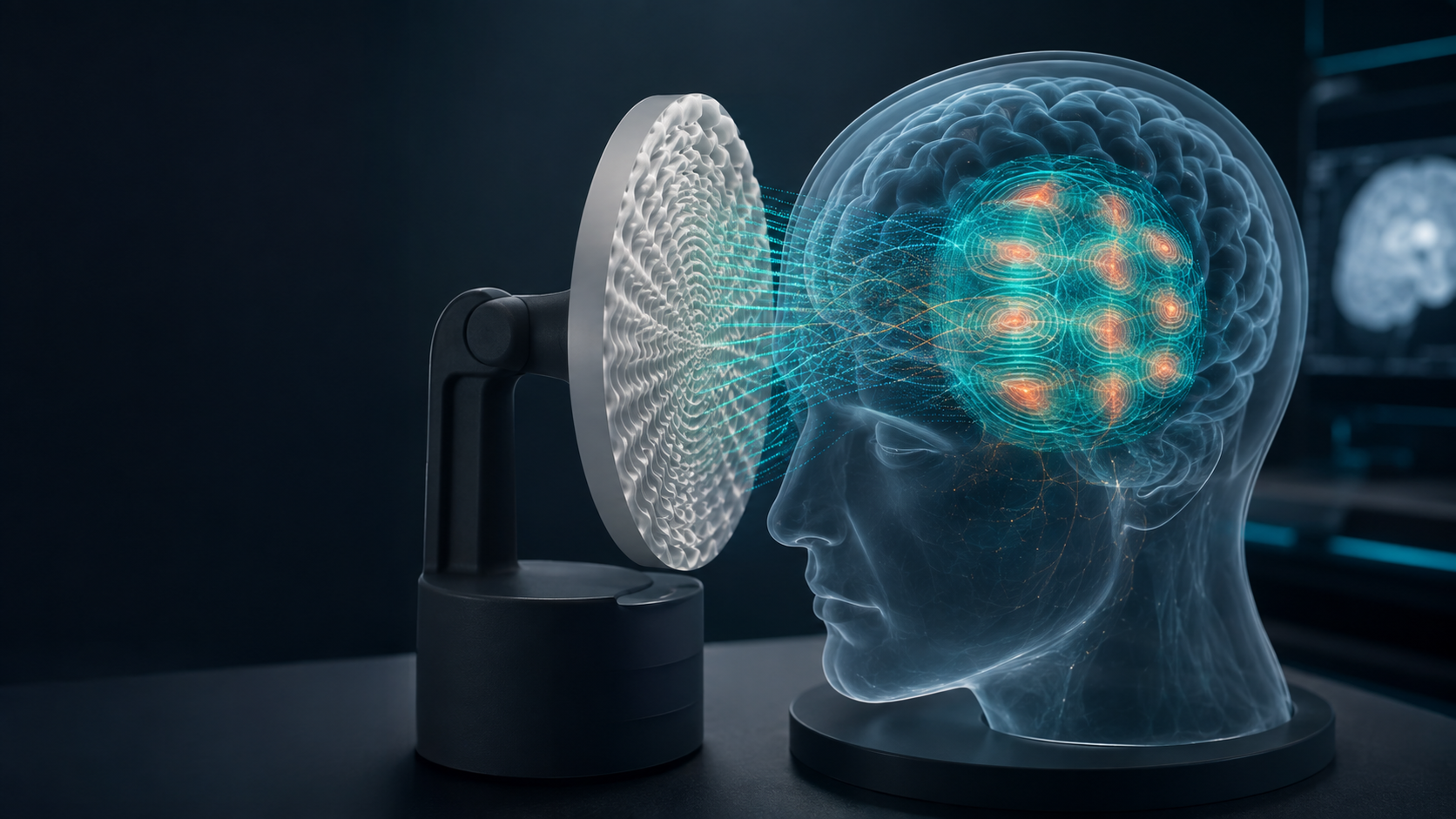
Focused ultrasound brain-access platform
HoloSoniq is developing a portable focused ultrasound platform designed to shape and control acoustic energy across distributed brain treatment volumes.
The delivery problem
Many promising CNS programs are limited less by therapeutic concept than by delivery. The broader vision is a universal brain-access infrastructure layer for drugs, biologics, gene therapies, cell therapies, and next-generation neurotherapeutics.

How it works
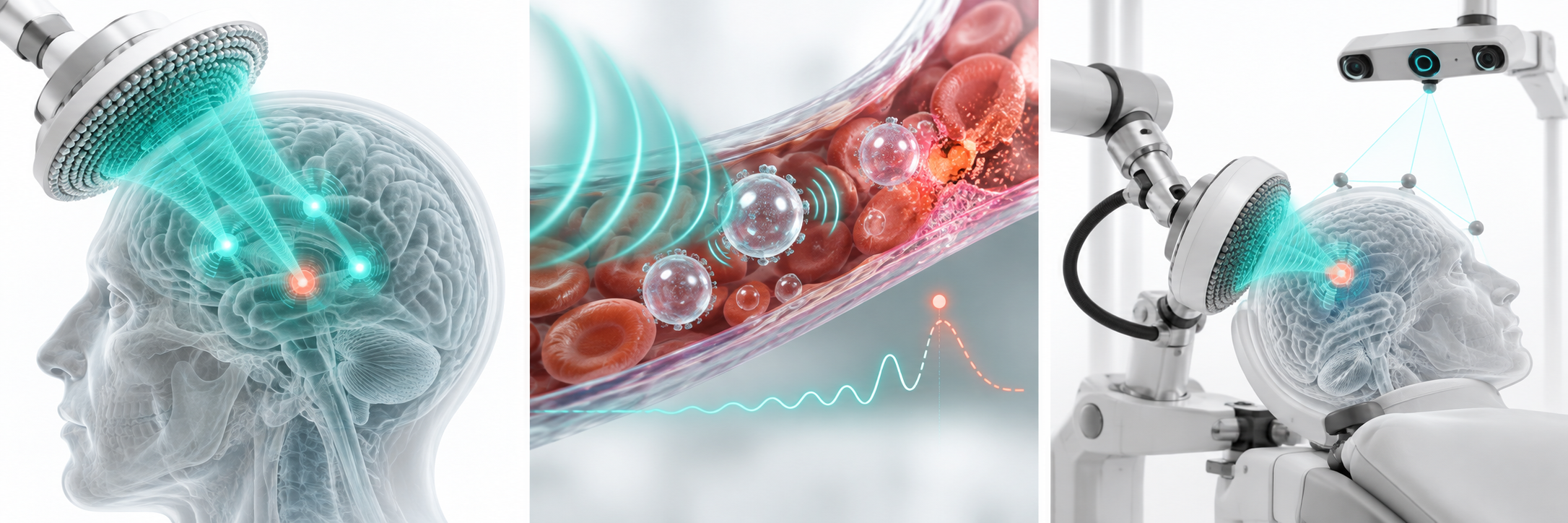
3D-printed holographic lenses are designed for high-fidelity volumetric beam shaping for distributed and multifocal treatment volumes.
Machine-learning models use passive cavitation signals to anticipate microbubble instability and support safer, more reproducible blood-brain barrier opening.
Nonlinear acoustic feedback, optical registration, and robotic positioning are being integrated into a streamlined translational workflow.
Development status
What comes next
Combine holographic lenses, robotic positioning, passive cavitation detection, and control software.
Run water-tank, phantom, rodent, ex vivo human-skull, and large-animal studies.
Define safety, software, manufacturing, and performance evidence with FDA CDRH feedback.
Collaborate with translational research centers, academic labs, and CNS therapeutic developers.
Collaborate
HoloSoniq is seeking conversations with focused ultrasound researchers, CNS therapeutic developers, translational funders, research centers, and strategic medical-technology partners.